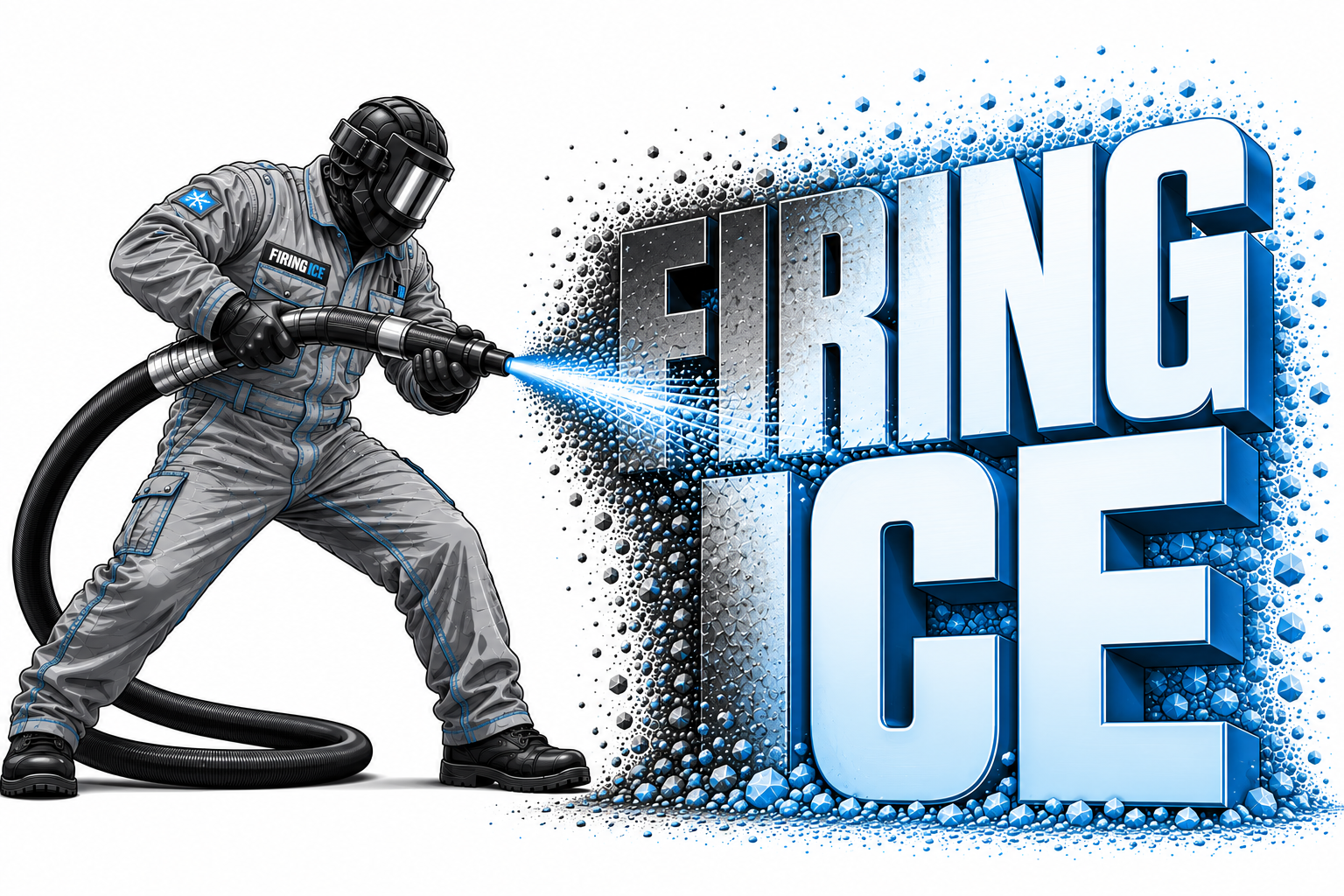
Powerful cleaning. Solid science.
Dry ice blasting combines compressed air and solid carbon dioxide pellets. The media disappears as gas; the removed contamination is collected and disposed of appropriately.
Engineered
sublimation.
01. Impact
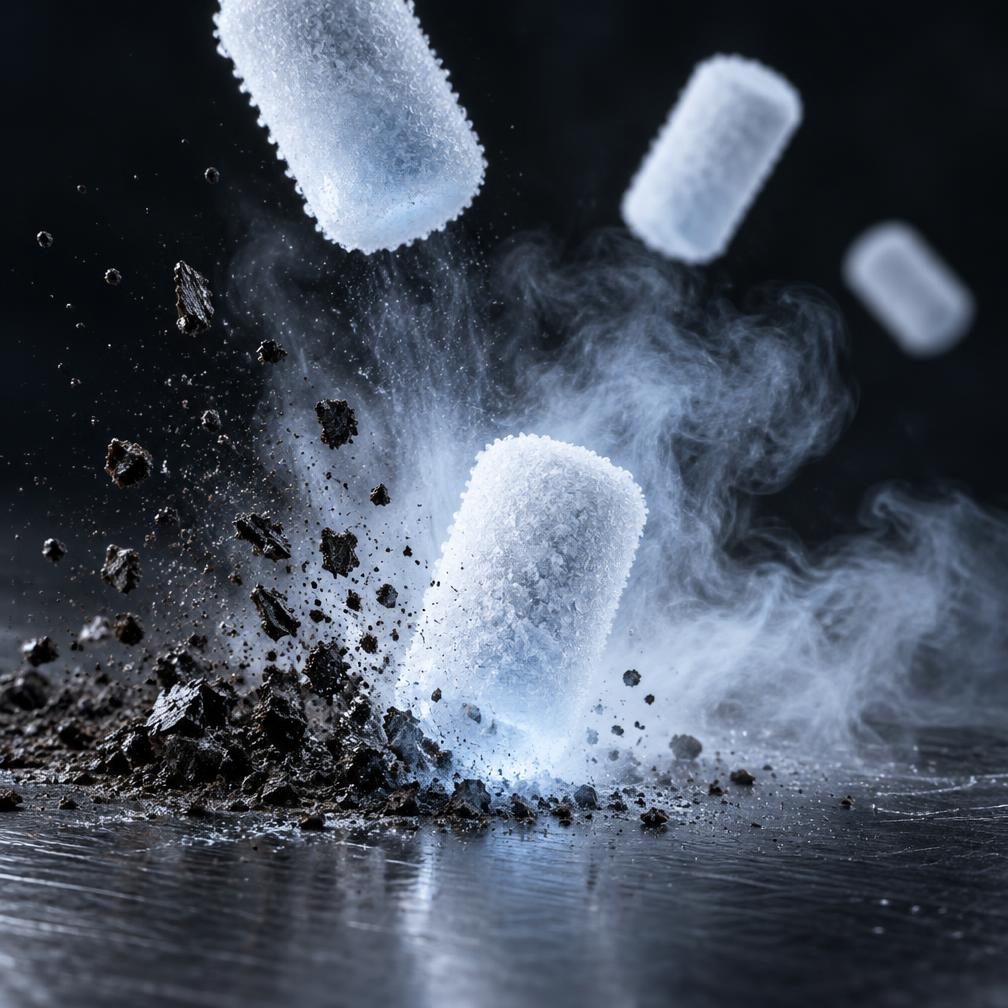
Compressed air accelerates solid CO₂ pellets toward the surface. Their impact helps break up the contaminant layer.
02. Thermal shock
The cold pellets create a temperature difference that can weaken the bond between the buildup and the underlying surface.
03. Sublimation
Dry ice changes directly from solid to gas. The loosened contaminants remain and are collected; no blasting grit or water is added.
From assessment to completion.
Understand the job
Review the equipment, surface, contaminants, access and desired outcome. Establish suitability and any test-area requirements.
Plan the work
Agree on scope, timing, isolation, ventilation, containment and waste handling. Coordinate with your site requirements.
Clean & review
Carry out the agreed cleaning, collect removed contaminants and review the outcome before your team returns equipment to service.